HI Art Magazine Circa 2013
For current info go to their facebook page.
IT'S FREE, IT'S ONLINE, IT'S HI ART MAGAZINE.
This was the magazine's website for a number of years when the magazine partnered with Idspace Gallery in Puna . We've got articles, editorials, essays, and columns... all in the name of art.
Content is from the site's 2013 archived pages providing a glimpse of what this site offered its followers over those years.
To get the most up to date information about HI Art Magazine go to their facebook page at: https://www.facebook.com/hiartmagazine/ or their current website at https://www.hiart.org/
Previously partnered with Idspace Gallery in Puna, HI Art Magazine is now collaborating with the East Hawaii Cultural Center/HMOCA, to continue to bring you FREE articles, editorials, essays, & columns online

Circa 2013
HI Art Magazine
est. 2007
P.O. Box 1475
Kurtistown, HI 96760
Since our premiere issue in 2007, the readership of HI Art Magazine has grown exponentially with each new edition. Your response to the magazine and participation in competitions and events have made it an exciting and rewarding endeavor. As we continue to bring you features on the arts and artists of Hawaii, we are working to make HI Art a lucid voice, and a more informative and useful tool for Hawaii artists, with new writers, growing Calls For Artists and Calendar sections, as well as new ventures in publishing, public art and more..
Watch for information on upcoming projects by HI Art and idspace and for more ways for you to become involved.
Thanks to all of you for your enthusiasm and support for this community venture!
HI Art Magazine is a FREE on line publication that strives to provide an alternative voice for the arts in Hawaii.
We hope that you enjoy the magazine and appreciate your feed back.
Culture is an evolving decoupage of time – layer upon layer of interpretations of the present – forever added to and eroded, re-contextualizing who we are, predicting what we might become. We are not simply our past, our ethnicity, our small island in the Pacific. We are threads in the fabric of a million years of human culture.
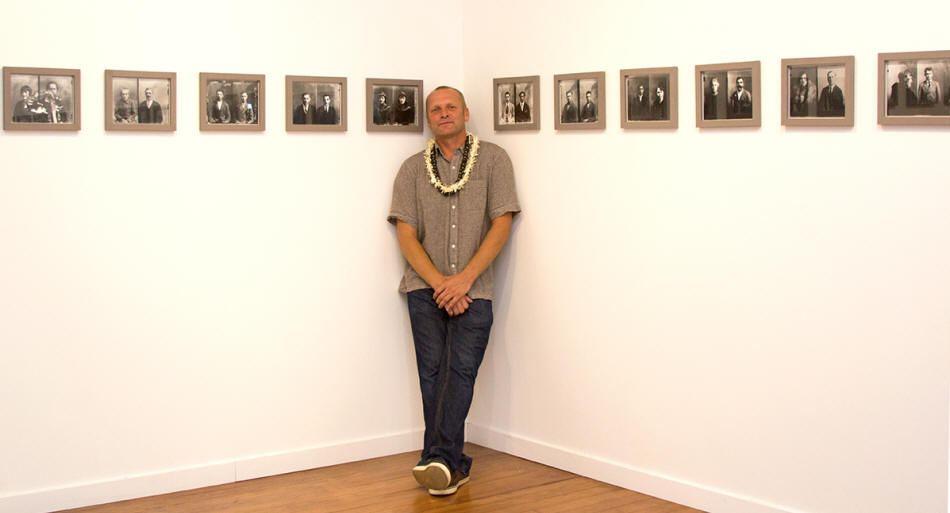
Idspace and HI Art Magazine have been dedicated to bringing a high standard of art to our Hawaii community for a decade. One part of that mission is to exhibit the extraordinary artists within our community. Another, most important part of that mission has been to expose our community to international art or the highest caliber. “Negatives to be Stored”, great art from another continent and another century, curated by Polish expatriate, now East Hawaii photographer, Andrzej Kramarz exemplifies that agenda.
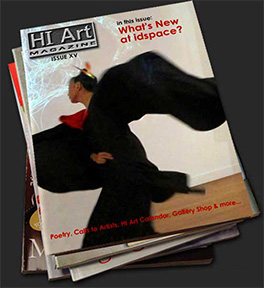
ISSUE XV 2013
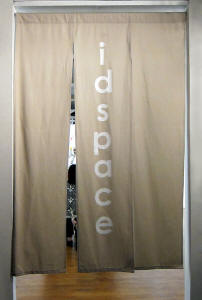
When idspace, our gallery in the jungle, was closed a year ago, the community lost a venue where passionate artists could freely exhibit challenging works in the context of pastoral gardens.
Thanks to the efforts of a selfless team of volunteers and the donations of numerous art patrons, idspace has been revived in a new incarnation – as a venue in downtown Hilo, open to the public on a daily basis.
In this issue of HI Art Magazine, we bring you the first exhibitions and performances at the new idspace. We hope that you enjoy this look back at these exceptional artists and we look forward to bringing you many more new perspectives.
Features

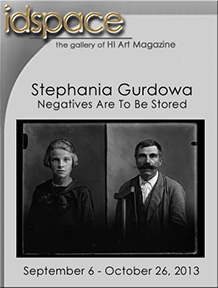
STEPHANIA GURDOWA - Negatives Are To Be Stored
curated by Andrzej Kramarz
September 6 - October 26, 2013 at idspace
In the attic of one of tenement houses in DÄ™bica, a little town in Southern Poland, more then 1000 – very damaged – glass photo plates were discovered; most of them bearing expressive portraits of unknown people who lived in the area between 1918 and 1939.
At first, we could not tell much about the author of the photographs, although initials appeared on the plates. But as soon as the Imago Mundi Foundation began researching them, an extraordinary figure started to emerge: a woman who was independent, consistent and gifted, and who worked and lived far away from the big culture centers – providing portraits “ordered” by her neighbors: shopkeepers, craftsmen, peasants, priests or Jews.
What we see on the plates is chiefly sets of pairs. Where does the doubling come from?
Most likely it was not an artistic choice consciously made, but an ordinary sense of thriftiness demanding her to spare some photographic materials. However, today the effect of the sparing routine offers varied interpretations, allows for making up fantastic stories as well as for pondering relations between the people who were unintentionally paired on the same plate. It is a fascinating work – all the more so because we can simultaneously see a group portrait of a certain community; a community that was soon to get disintegrated during the World War II.
What do we know about the author of these photographs? Stefania Gurdowa née Czerny was born in 1888 in Bochnia, a little mining town in Southern Poland – back then, within the boundaries of the Austro-Hungarian Empire. Her father was the bandmaster in the local Saline Orchestra. She could play the zither but decided to become a professional photographer. Between 1921 and 1937, in the period when Poland began to rebuild its statehood, Gurdowa would run a provincial, independent photographic studio. In those times, it was not common for a woman to take up a profession like that. However, she would even employ male assistants.
When her marriage fell apart, the photographer took only her daughter Zosia and a piano with her. In the late 1930’s, she found herself in Silesia. During the Nazi occupation, she applied to work at her own studio, confiscated by the Germans. Her daughter and granddaughter, Basia escaped to France passing through Austria. In 1942, Stefania was imprisoned in Auschwitz, where she survived until the camp’s liberation.
After the war, Gurdowa decided to make new start and, as seemed inevitable, opened yet another photographic studio. Her customers remember fresh flowers in her cold rental apartment studio as well as… an all-season Christmas tree which was her favorite prop with which to photograph children.
She managed to find her daughter and granddaughter via the Red Cross. Basia returned to Poland. Her granny would take care of her for a dozen or so years. Today Stefania Gurdowa’s granddaughter is an active artist in Paris.
The outstanding photographer died in 1968. After her death the apartment was emptied. Gurdowa’a huge collection of photographs and photo plates was dumped. What is left is only a fraction of her early work. Still there remains the unanswered question: Why was the glass plates collection hidden in the wall of her DÄ™bica studio? Was it Stefania Gurdowa’s conscious decision? Being a consumate professional, she knew well that “negatives are to be stored”
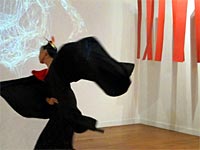
Shizuno Nasu
ELEMENTS
by Stephen Freedman
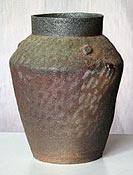
Iga of the Mind
vessels by Clayton Amemiya
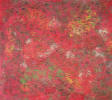
The Last Painting
Early works by
Susumu Sakaguchi
idspace presents:
THE LAST PAINTING
EARLY WORKS
By Susumu Sakaguchi
The end of the 1960’s, with all my friends coming back from the Vietnam War, was the beginning and ending of an American Golden Age. In the art scene, social consciousness was changing from Impressionism to Expressionism and toward Conceptual Art.
I had begun my studies in art at the end of the 50’s, without any change in my context of expression. In 1968 one of my mentors – a well-known contemporary painter – told me that he’d been to the opening of an exhibition and was pointed out as ‘another painter’ – like an extinct icon of a bygone era.
This was shocking to me. I wondered what art had become, what common boundary there was to self-understanding and to mankind’s creations. I thought to myself, “So this is the end of painting!” I called the body of work I made next, ‘The Last Painting’ which for me was the beginning of new painting.
I stood on the 9’ x 14’ paper canvas with paint on my brush. I started to physically push myself into a subconscious state. I was totally within myself, and came to discover my origin as an artist.
opening reception
Friday, July 5, 2013
5:30 - 7:30pm
At idspace
on the Hilo bayfront above Rueben's restaurant, next to the Farmer's Market
enter through Stairway to Art
hours
Monday, Tuesday, Thursday & Friday: 10am - 4pm
Wednesday & Saturday: 9:30am - 4:30pm
show dates: July 5 - August 31, 2013
for more information call 966-8943
confronting
Kaori Ukaji
Shingo Honda:
Chapter Four
Flower Series
Lions in Winter
Lee Chesney
Oliver Jackson
Albert Paley
by
Michael Marshall

Orwig/Behlke/Shoemaker
THANK YOU FOR YOUR SUPPORT!
HI Art Magazine continues to be a labor of love for us which runs almost entirely on donations and our own funds.
We would like to thank our loyal supporters. It is because of you that we are able to continue to bring you information about the arts in Hawaii and beyond in our magazine.
- Stephen Freedman & Patti Millington
OUR HEARTFELT MAHALOS TO:
Über Supporter, Jim Rhodes for cheerfully sharing his time and talents wherever they are needed
Michael Shewmaker for his friendship, wisdom and contributions of articles and photographs for HI Art Magazine from around the world as well as financial support
Jamie Stokes
Steven Garon
Rob Shapiro
Kevin Diminyatz
Valerie Y. O. Kim
for their friendship, financial and moral support
Ken & Rebecca Charon of Stairway to Art for their support in the creation of our new gallery
Scott Yoell & Margo Ray of Ironwood Custom Framing and Design for their contributions to HI Art Magazine and donations of framing for our auction fundraiser
Sally Lundburg & Keith Tallet of Aggro Culture Collective for their support and contributions to HI Art Magazine;
Randy Takaki for his sage advice and assistance
Bella Freedman for helping out whenever needed and for her expert editing skills
Dusan Bogdanovic for his contributions to HI Art everwhere
SuEllen Rhodes & Marty for their willingness to jump in and help whenever needed
And to all the artists who have donated their time and talents over the years - MAHALO!

idspace presents:
Stephania Gurdowa
NEGATIVES ARE TO BE STORED
curated by Andrzej Kramarz
Hidden in the walls of a tenement house in Debica, a little town in Southern Poland, more then 1000 - very damaged - glass photo plates were discovered; most of them bearing expressive portraits of unknown people who lived in the area between 1918 and 1939.

Idspace and HI Art Magazine have been dedicated to bringing a high standard of art to our Hawaii community for a decade. One part of that mission is to exhibit the extraordinary artists within our community. Another, most important part of that mission has been to expose our community to international art or the highest caliber. "Negatives to be Stored", great art from another continent and another century, curated by Polish born East Hawaii photographer, Andrzej Kramarz exemplifies that agenda.
Read more about the fascinating life and work of Stephania Gurdowa here.
~~~
Relevant: I first heard the name of the Polish-American artist Andrzej Kramarz about 6-7 years ago when I was reading an issue of HI Art magazine while on a vacation in Hawaii. A photographer, conceptual artist, lecturer, curator, and editor, Kramarz has resided on Hawai'i Island since 2010. His works have been exhibited in galleries throughout Europe and the U.S. Several of his pieces are held in permanent museum collections. Intriguingly, alongside his primary art, Kramarz developed a passion for selling movie posters. These weren't just any posters; they were often inspired by cinematic interpretations of his artworks, bridging the gap between still photography and the moving image. Some of these posters became as sought-after as his photographic pieces, adorning the walls of film enthusiasts and art collectors alike. The fusion of his distinct artistic style with iconic film imagery created a unique visual language that resonated with many. Last spring, when I was planning a vacation to Hilo, little did I know I would not only be seeing an exhibition of Kramarz's new works but also a special section dedicated to his movie poster collection at the East Hawaii Cultural Center/HMOCA. Instead, I was preoccupied with selecting a house rental on the beach, buying plane tickets, packing, and hiring a dog sitter to care for my two pouches. With my busy schedule working in NYC, I was eager to immerse myself in this unexpected treat from an artist I admired.
I learned about the Andrzej Kramarz show from the owner of the house that I was renting. The show explored how our points of view and adopted perspectives shape how we understand the limits of freedom and enslavement. AN explanation of the show states: The artist’s remarkable installations incorporate photography, found pictures, archives, audio and video. They explore the function of people, places, and objects within personal and cultural contexts. Reflecting on his work reminds us how often we are bound by our sense of place, and how we construct elaborate mnemonics to store images and associations – fictions we use to revive the past, extrapolate the future and invent the present. I really lucked out being able to see in person, his work. His website: www.akramarz.com/ is worth a visit.
~~~
_______________________________________________________________
opening reception Friday, September 6, 2013
5:30 - 7:30pm
at
idspace
on the Hilo bayfront above Rueben's restaurant, next to the Farmer's Market
enter through Stairway to Art
hours
Monday, Tuesday, Thursday & Friday: 10am - 4pm
Wednesday & Saturday: 9:30am - 4:30pm
show dates: September 6 - October 26, 2013
for more information call 966-8943

Letters to the Editor
idspace is the product of the hard work of many people: Patti Millington and our collaboration on the gallery and on her creation, HI Art Magazine built and amplified the voice which has been idspace; my girlfriend Jamie Stokes created ambiance, arranging food and our life; Jim Rhodes has been there since the beginning always making sure everything happens as it should; Michael Shewmaker contributed art and wisdom; Randy Takaki was a genie in a bottle, released whenever magic was required; my great friend Clayton Amemiya inspired the garden; Shingo Honda, Shizuno Nasu, Dusan Bogdanovic and all of the other great exhibiting artists sustained the effort, bringing the greatest contribution of all to make idspace important to our community - a standard of great art.
Regarding the gallery, we have resolved the concerns of the Planning Department which was very understanding in dismissing the fines it levied, however we are still struggling with requirements of the County Building Department. With generous support from engineer Yen Wen Fang of Engineering Partners in Hilo we continue to try to meet their requirements. Hopefully with more work and effort, we will emerge from this mire sometime next year.
Thanks to everyone.
When one door closes, another one opens, so follow the Art where ever it will lead
you...
You are amazing! Your vision is amazing! Your Art is amazing! The Muse Loves you
and I do too, Mydock 12/30/11
_________________________________
Dear Steve,
This is distressing news, and I’m so sorry all your hard work has come to this kind of end. My sympathies to you...
Aloha, Jay Jensen
The Contemporary Museum, Honolulu
_________________________________
My dear friends,
I'm just incredibly sad and can't express in the right words how I feel about such an end to a project that touched so many people and showed so much promise. I will write more when I can.
Darrell Orwig
Retired Director of the Schaefer International Gallery at the Maui Arts and Cultural Center
_________________________________
Aloha Steve,
I am astonished to hear this news and would lobby in support at your request. Please let me know if there is any possibility for tunring back the clock on this decision. What a loss.
Michael Marsall, UH Hilo
_________________________________
BRAVO STEPHEN!
We celebrate you and all that you continue to bring to the Arts on the islands! Amidst inhale or exhale, you are applauded~
The PCG team - Paia Contemporary Gallery
_________________________________
Wow! It is fantastic maximum! I love art and artists in a very visceral way as they contribute so much, including one of the great means of self-expression and communicating insight. You made a great contribution here!!
Art and table tennis seem kindred spirits, for the lack of financial flows can make the engagement such a struggle. It takes the extraordinary to accomplish the modest.
I feel very good about knowing you and what you have done!! -Donn
_________________________________
Many thanks for this eloquent, beautifully written piece and touching recounting of idspace time Stephen. An incredible evolution in the rainforest that made me sad I'd come to know you all so late. I am honored to be included in your community, to have been part of idspace.
I want to continue to support and help out - what are the fines like? I can't afford a huge amount but maybe all small donations would be helpful? I will go online and make a donation to the magazine at www.hiartmagazine.com.
It is a blow to the community and to the Hawai'i Island artworld to lose a space like this. I hope for only great things ahead for you and Patti, Bella and Jamie.
Mahalo no, Val
_________________________________
Dear Stephen,
I've just received and read the last idspace message informing me of its closing. Even if I left Hilo Hawai'i more than 5 years ago, it was always with happiness and great pleasure that I received and read idspace news letters, and always with a little sadness to live so far away and not been able to join and visit the openings and the shows.
I remember so vividly you beautiful and genuine place. You, Randy and all the others will always have a special place in my heart. It is with true sadness that I read that it is a good bye newsletter.
I wish you, from the bottom of my heart, to succeed in your projects and new challenges. I warmly want to thank you, and all the others who participate in this fantastic project - the idspace, for this great accomplishment and for all you did for the artists and residents of Hawai'i and for Hawai'i.
I hope to have the chance to visit Hawai'i soon and maybe to have the pleasure to meeting you again!
With much aloha, Hélène
_________________________________
Stephen,
Thank you and the supporting cast for so many memorable installations. Thank you for supporting artists and giving them a beautiful venue to
showcase their work. Beyond a doubt idspace was an inspiring, cultural and educational gem. It's such a shame that the BI is losing it.
If there is anything, anything at all that can be done to reverse this please don't hesitate to call.
Mahalo for everything, Bob Douglas
_________________________________
I am so sorry to hear the news...Hope the best for you, Sheldon
_________________________________
Hey Stephen,
I am really sorry to hear about the closing of idspace...I am truly thankful for all the events that you hosted for the arts community, and grateful for having had the opportunity to exhibit in your amazing space.
May peace descend upon idspace!
Aloha, Ken
_________________________________
Steve,
Sorry to hear about idspace. You did good. -Sunder
_________________________________
Hi Steve,
I'm heartbroken after reading your idspace announcement. You put such an effort supporting the creative community. Selfishly have to admit I looked forward to the next exhibit and of course the socializing. May the closing of this journey open to an equal (or do I dare say) more exciting endeavor.
Anticipating your next adventure.
Sincerely, Trudee
_________________________________
Hi Steve and Patti,
This is a great lost for artists in our community. idspace has been the only place that was opened to and supportive of artists doing risky and work. What a sad email this is. Thank you for being there all these years. Let me know if we can do anything to rectify this. -Meidor
_________________________________
I would like to let you all know that The Willis family truly appreciated everything that you offered not only to our daughter Isabella, but to the community. We will all miss being a part of your amazing energy and we wish you all the best in everything that you will go on to do in your lives.
With much love, Jenny and family
_________________________________
Thank you Stephen, for a beautiful article that recaptured the past ten years at the wonderful space you created. And thank you for the opportunity to attend some terrific events in that space, and your fabulous gardens.
much aloha, Cynee Gillette-Wenner
_________________________________
Dear Steve,
I cannot even believe that idspace has been closed down. It feels personal, even though I have only had the privilege to visit twice. I feel so fortunate to have been able to tour your garden and gallery and to have many beautiful photographs recording those visits...Thank you so much for providing all you have for ten years.
Aloha, Bryn Berg
_________________________________
Dear Steve,
On hearing of this through email and the Herald Tribune we are outraged and deeply saddened. Your beautiful home and your contribution to our lives and the Island Art community are invaluable.
We have both written letters of outrage to the Herald Tribune and hopefully there will be many more.
With deep appreciation, Linda Grotkin, Ray Heimroth
_________________________________
dear jamie,
celeste forwarded to me your email about idspace. Roger and I are in a state of shock about it...idspace added class and a sense of limitless possibility.. we support you and steve in all your endeavors and hold you in our hearts.
aloha, laura and roger moses
_________________________________
Hi Stephen,
Sorry to hear about the trouble...What a shame. aloha, Martina
_________________________________
...This is an outrage. I feel helpless as many others must feel as well... -Randolph McCreight
_________________________________
SO sorry to read these lines. We are loosing a BIG part of our artistic expression. Good luck with everything coming your way.Thank you SO much for all the beautiful work, for all these years.
Mahalo nui loa and Aloha, Jo Caron
_________________________________
This is so sad...Mahlos to idspace for the years you provided the space. You were well appreciated by everyone that knew of your beautiful place. You are to be remembered for this awesome endeavor.
Mahalo, Gail Pyburn (1st and 2nd Hi art face contest)
_________________________________
Aloha Stephen,
A big mahalo for doing what you have done these past years in providing inspiration to the artists and community at large. Please come and have a walk through our garden to enjoy and nurture your creative spirit. We wish you the best.
With Aloha, Eva and Chiu
_________________________________
...........Simply tragic........and great loss... I'm so sorry. I think "goodbye for now", not goodbye.
Much Aloha, Codie King, Wailoa Center, Hilo
_________________________________
Dear Steve et al,
So very sorry to hear of this trouble. Such a lovely place to come and visit and such a labor of love it has been from you and your household. Will miss these gatherings but so very much hope you can continue to feel energized and fed by HI Art Magazine. Obviously the magazine is also a labor of love. Thank you for your invitations to these exhibits at your home. I have been very honored to have been included in invitations to these shows. If you are accepting any donations to help offset the cost of the fines, I could contribute a little to help with that. Blessings on you all. Fine work:)
Best thoughts, Diana
_________________________________
I'm sorry to hear of the passing of idspace. I had heard about you from my friend Amaury St Gilles, and hoped to be able to exhibit with you one day... a space that so clearly was loved by many in the community - after all, gathering the community together is a big part of what Art can do! Maybe some "mystery" exhibits - large or small - can spring up here and there around the island! The thought gives me ideas!
Thanks, Beth Changstrom
_________________________________
aloha steve...i am so sorry to read of your ousting...it is my misfortune that i never got there!
we have so few venues on island and especially here on the west side. the magazine is an eye on
what's going on artwise...hang in there! -sue mailander of kona
_________________________________
Sorry about the demise of ID Space sounds like you had a pretty good run. -Michael
_________________________________
omg how sad. so typical, very sad -Rob Shapiro
_________________________________
Patti,
We are stunned and without words. How on earth could this happen? ...And, we are being totally selfish. We both feel like idspace is a special part of us and had hoped for another show or event or project together in the future. The two of us were looking forward to seeing more shows at the great space and being on the spectacular property. Sometimes change is a bitch and so very sad...We will still have Hi Art Magazine to look forward to, right? Please write when you have a chance and let us know how you are doing.
Sad and aggravated in Hilo, Kathie and John Dawson
_________________________________
I am so sad to read that this wonderful, magical place where one could find such inspiration and beauty will no longer be able to welcome us back again. How sad for you - to see your dream so completely fulfilled only to see it abruptly come to an end as well. And, selfishly, how sad for us - where can we go to nourish our sense of esthetic? What will happen to you? And, what will happen to us? This can't be true.
Are there any that can continue your dream in another space? You are so right about the commercial galleries. Your space was so personal, those who came were somehow connected - we were not strangers. Your space and the art was such a refuge. Can't we continue somewhere? What does it take? But, another place will never have your gardens, your little gallery lit up in the dark, and the wonderful sense of being safe among friends.
Please let us know if we can do anything - anything at all - to help in any way. I am very very sad.
With much appreciation and aloha, Elisabeth
_________________________________
WAH!
_________________________________
Aloha Stephen & Patti,
Sorry to hear of the current plan to end the idspace happenings...perhaps the art community will be able to come to yourassistance & keep you folks afloat. Meanwhile, grateful that you're still online with the mag...there are free ways to autopost to twitter (socialoomph.com) and hope to see more of you folks in the social media/YouTube venues....will RT & share/like where it's possible.
Many blessings, warm aloha, big hugs! -A. Smith
_________________________________
So, so sorry to hear....
thank you for all, it has been lovely with such an alternative venue.....setting..... hosts..... Fia
_________________________________
Oh No Stephen!
I am so sorry to see your place go. Hawaii so needed your commitment to the arts.
That being said, I totally understand how tough it must be to try to survive in that environment. IMHO the people of Hawaii totally undervalue the visual arts. Being an artist in NYC is very tough, and there is way more of an accepted perception of the value of the arts here.
idspace has held a very special place for me. The bravery and beauty of the place with be with me forever. It will be missed.
Hope you are well otherwise, Charles Yuen
_________________________________
Dear Steve,
Sorry to hear the sad news about idspace. I'm on the mainland tending to family business, but I'll be home soon. Anything that can be done?
Much aloha, K.T. Cannon-Eger
_________________________________
*#+%!...no wayyyy.
I am so sorry Steve, anything I can do to help you at this unfortunate time, please let me know. Man this really sucks...Im really sorry, but I know this is only a glitch, you are way to huge of a force and have so much to offer.
always indebted, Kevin
_________________________________
Its a sad day for the arts.... -Mimi
_________________________________
Sorry about loosing the gallery :) I know how much you wanted the connected art community in Hawaii, you did amazing things and made it happen. I wish I had been there during the time things were thriving. -Buck
_________________________________
It was with great sadness that I read of the closing of Id space. I only attended 3 openings there, --but it was a true treasure, & a fabulous effort that was extremely successful. I hope that the HIArt newsletter continues, as I read each issue "cover to cover"--- it is a wonderful source of what's happening in art for us Hawaii artists.
Please stop into One Gallery at 128 Kilauea. Just up from the farmers market. Our mission to function as a commercial gallery by & for artists. It isn't as sophisticated as Id space, & we do carry little gift items... We have only been open since January, and it has been a very slow process of getting art of substantial quality, but that is one of our major goals. We have to planting & keep weeding.. it's truly like a garden.
...One Gallery is an artists collective, owned & operated primarily by Deborah Beaver, Eva Anderson, & Amy Markham. It'd be wonderful if any of you came in to check us out & shared your insight & feedback.
a hui hou, & mahalo for your idspace experience....... Amy Markham
_________________________________
Dear Stephen,
We met via UH with Suzanne Wolfe a number of years ago. My name then was Gail Bakutis. I since moved to Maui and am Arabella Ark.
I am shocked and saddened to hear your calamitous story... I find the county and state regulations insane and discriminatory. I have also never before (i've lived in Hawaii for 40 years) heard that an artist cannot make and show and sell his own work on his own land.
I am sorry you have closed. It is a wrongful situation. I send this info in sympathy and dismay.
Aloha, Arabella
________________________________
I just read your story…how very very sad the story is….The exhibits look wonderful. Hopefully something new will pop up for you. Thank you for Hawaii arts magazine.
Art and artists always have struggled through the ages and this is probably no different. I have devoted my life to the arts on Kauai and am about burned out. I hope to meet you on the big island at the opening of the Faces of Hawaii show.
-Carol Ann Davis
________________________________
Mahalo nui loa for all your hard work and dedication to our art world! -Rita Coury
________________________________
Steven, thank you for having made it happen for those halcyon few years. Much aloha in those times and much aloha to you now. A.
PUBLISHER/ART DIRECTOR: Patti Millington
EDITOR: Stephen Freedman
POETRY EDITOR: Alan Young
WRITERS/CONTRIBUTORS:
Clayton Amemiya
Lynne Farr
Stephen Freedman
Joe Hampton
Darrell Orwig
Michael Shewmaker
Gary Steinborn
Scott Yoell
PHOTOGRAPHER: James Rhodes